
Last updated November 18, 2026
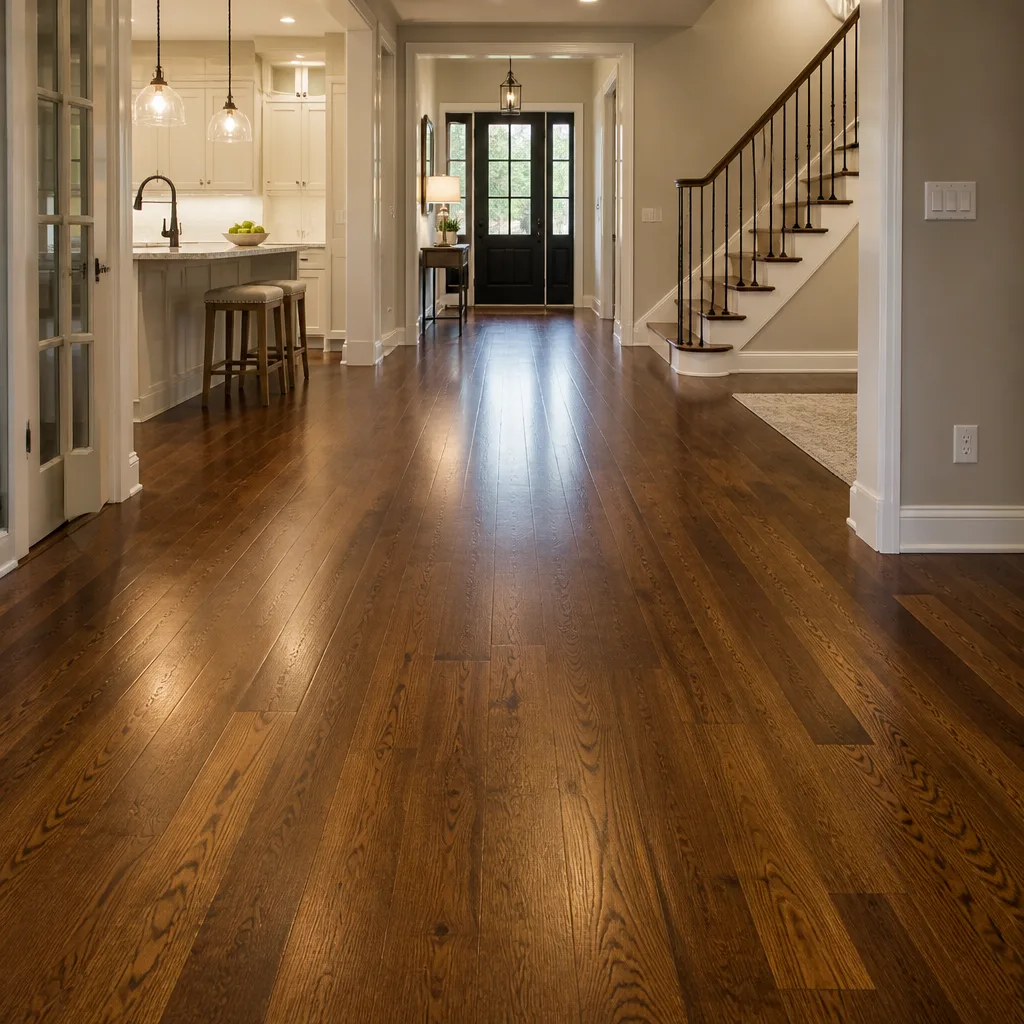 Hardwood
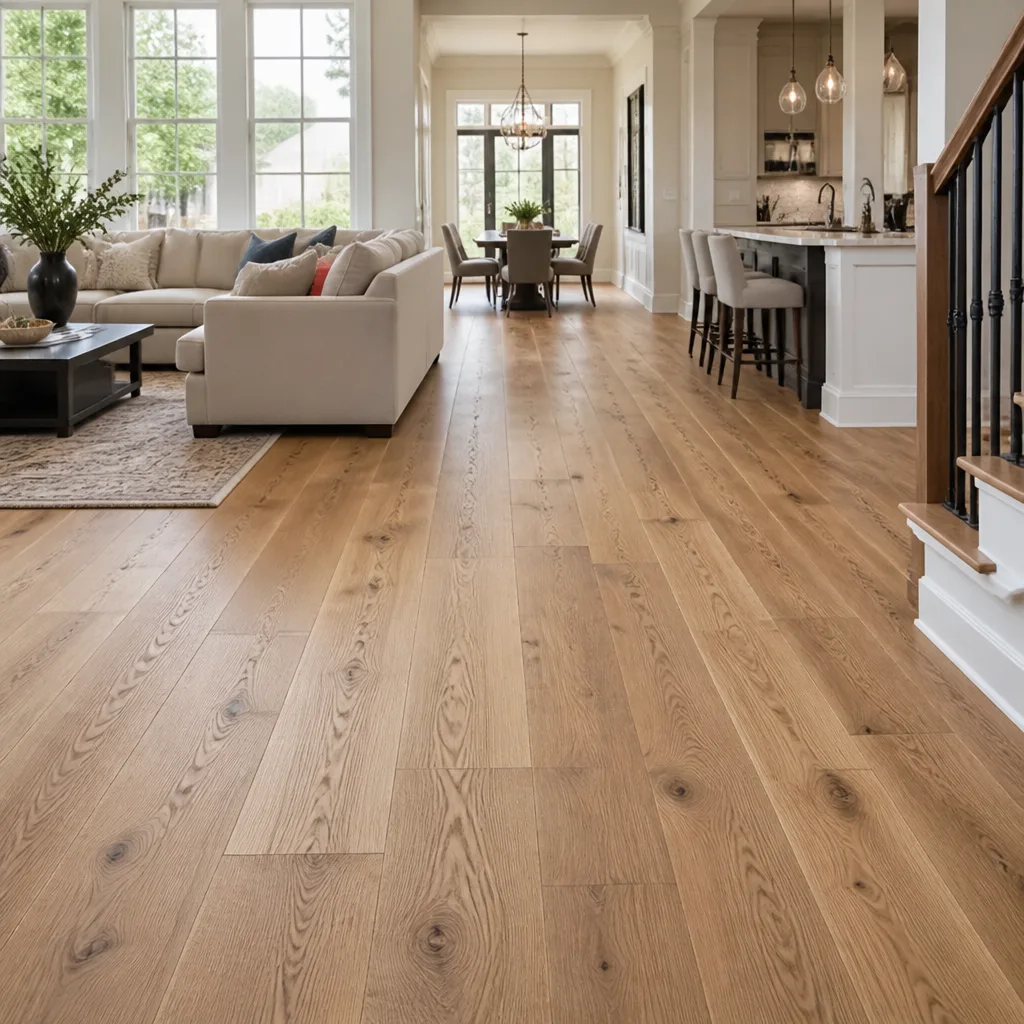 Engineered hardwood
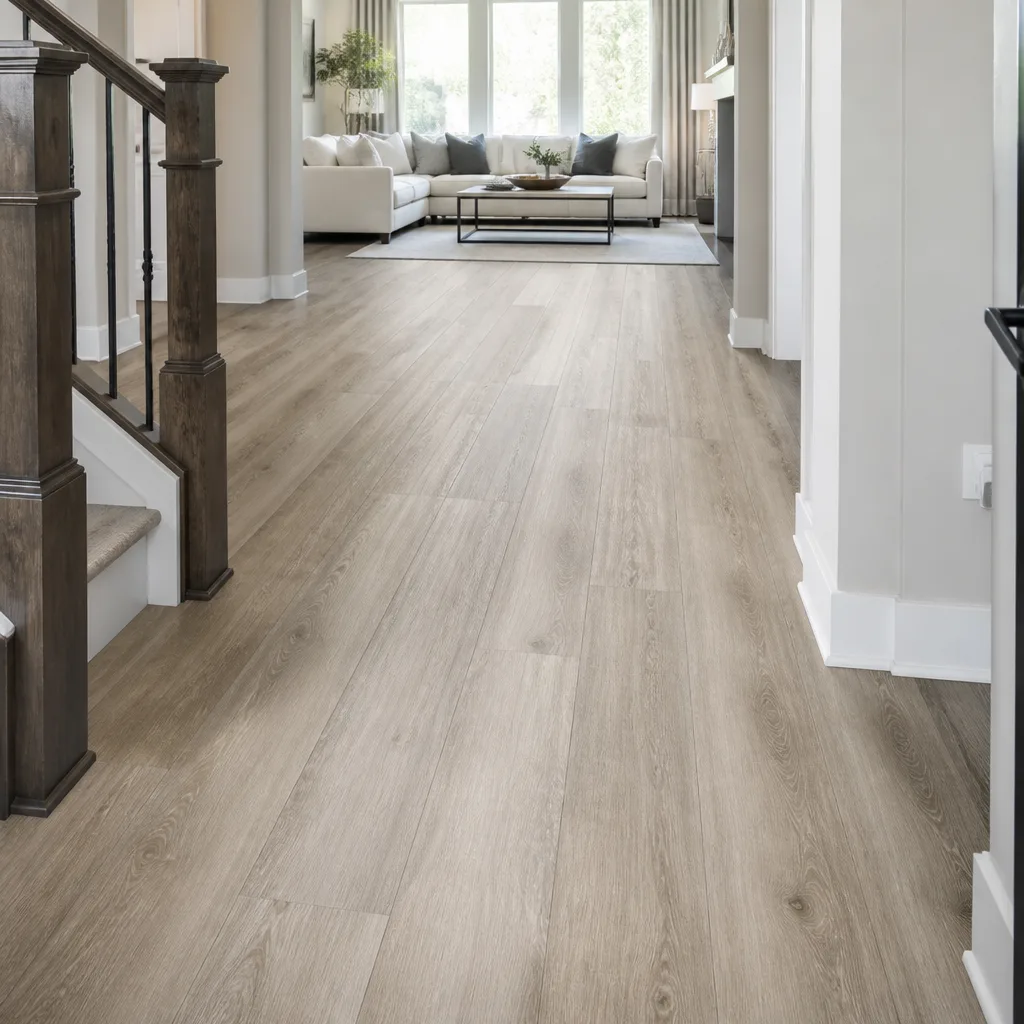 Luxury vinyl plank
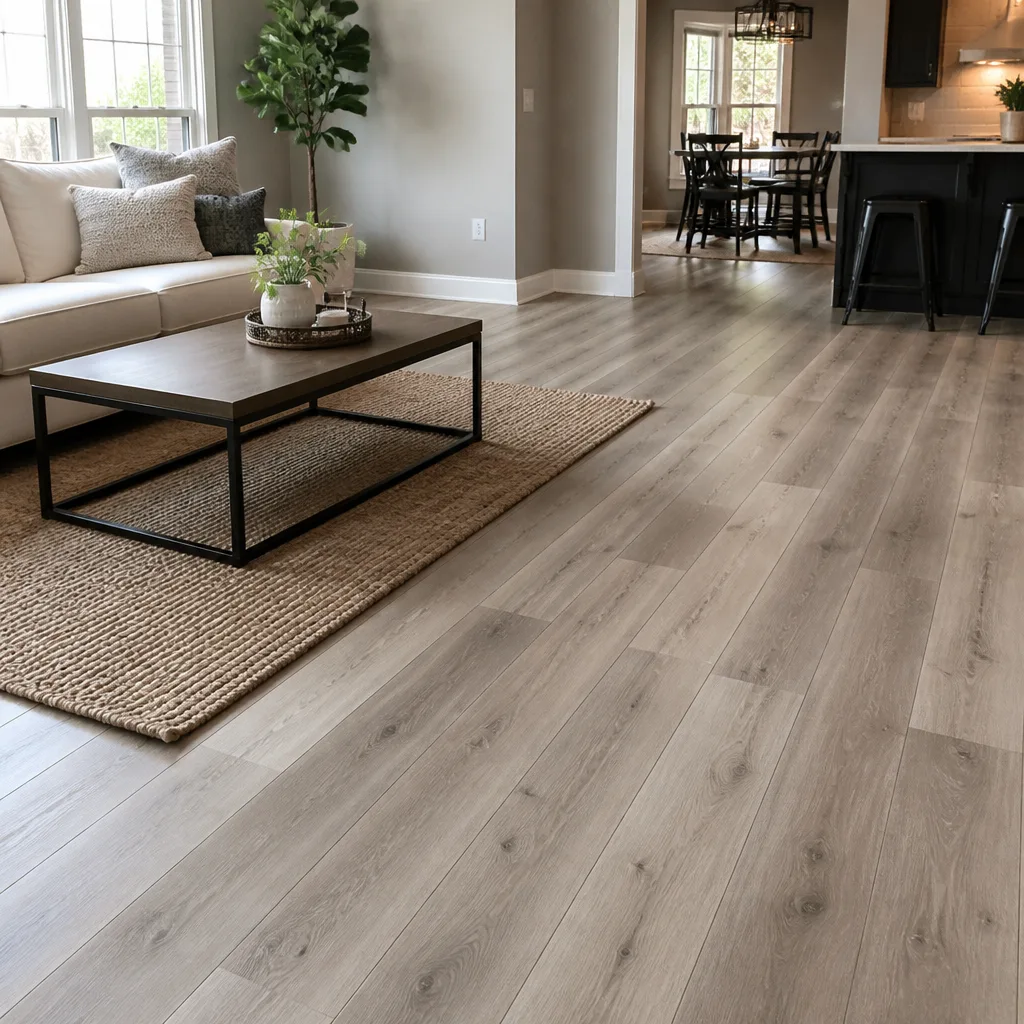 Laminate
 Porcelain tile
 Carpet
 Shaw
 Mohawk
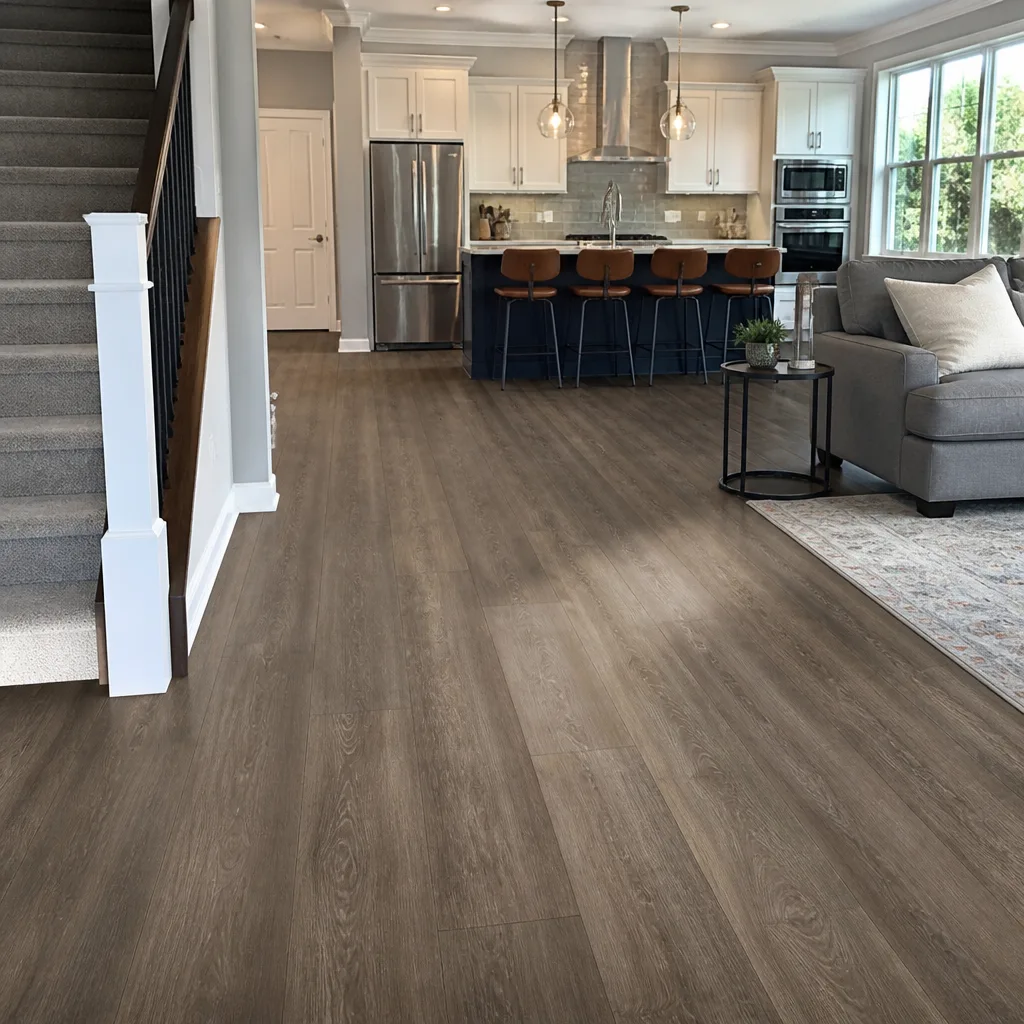 COREtec
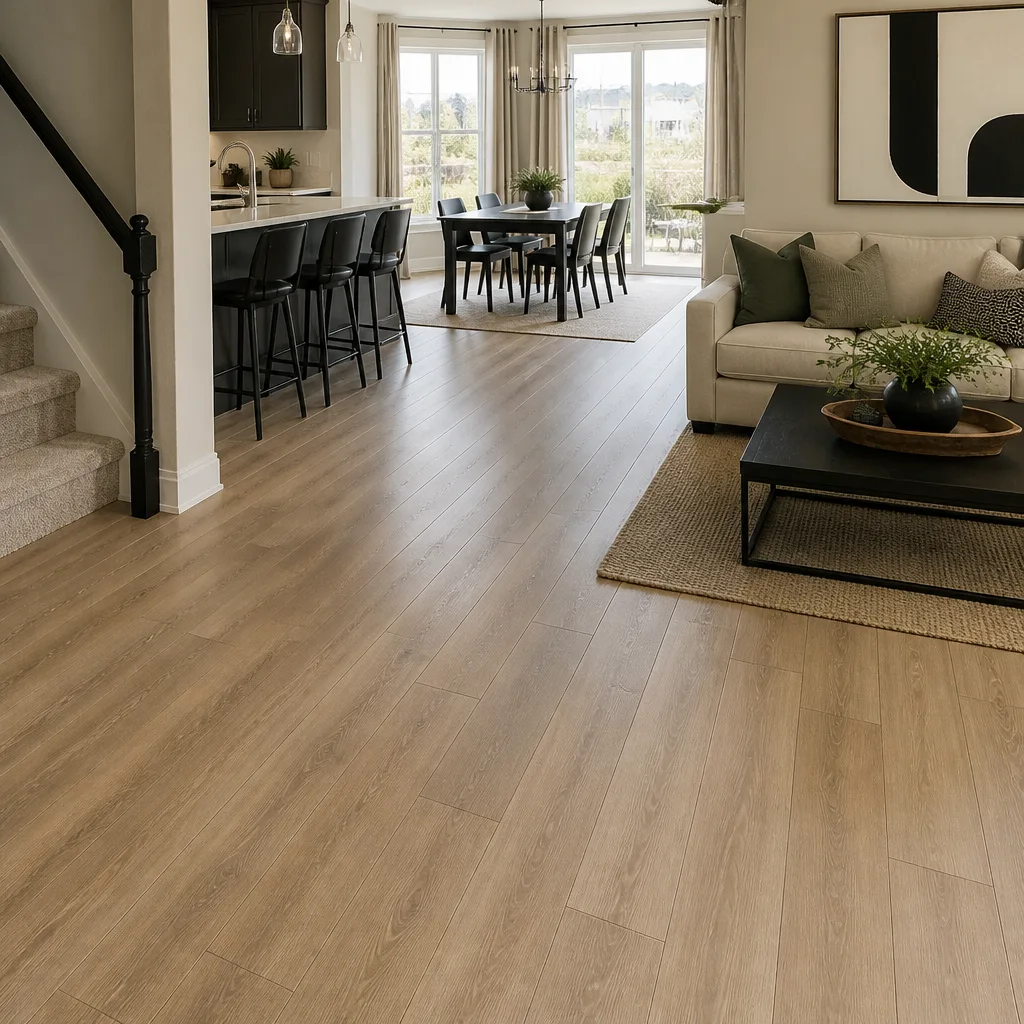 Pergo
Free in-home measure and written estimate: Shaw, Mohawk, COREtec and Pergo lines compared on your own rooms, with carpet, tile, vinyl plank, laminate and hardwood laid out side by side
Get your free estimateHow Winchester’s Climate Can Affect Your Flooring Choice
Solid hardwood can shrink enough in a dry Nevada winter to open gaps you could slide a coin into, and yet it stays one of the most requested floors in the region. That contradiction is the whole story of flooring in Winchester. Buyers choose wood for how it looks on the sample board and then learn the hard way that a floor is a living material reacting to the air in the room. Winchester, NV sits at roughly 4,500 feet of elevation, with low humidity and wide seasonal temperature swings, and that combination quietly disqualifies several popular products that do fine in coastal or humid climates. What follows is how the local climate actually behaves, how each material responds to it, and how to pick a floor that will still be flat and tight years from now.
Quick Answer
The best flooring for Winchester’s climate is a material that tolerates low indoor humidity and big temperature swings: engineered hardwood with a thick veneer core, water-resistant rigid-core vinyl like COREtec or LifeProof, and glazed porcelain tile, especially large-format. Solid hardwood and floating installations are the riskiest choices in high-desert conditions because the dry winters pull them apart at the seams. Matching the material to the room and the season is what separates a floor that lasts from one that gaps or cups within a few years.
Styles & brands we work with
- Hardwood
- Engineered hardwood
- Luxury vinyl plank
- Laminate
- Porcelain tile
- Carpet
- Shaw
- Mohawk
- COREtec
- Pergo
Table of Contents
- What Winchester’s Climate Actually Does to Wood and Vinyl
- Relative Humidity in Winchester by Season
- Solid Hardwood vs. Engineered in a Dry Winter
- Why Water-Resistant Vinyl Handles the Swing Best
- Large-Format Porcelain Tile: The Climate-Immune Option
- Radiant Heat and Glue-Down vs. Floating Installs
- Acclimation Timelines for Winchester, Not the Spec Sheet
- Matching Material to Each Room
What Winchester’s Climate Actually Does to Wood and Vinyl
Wood moves. That’s the single fact that governs every flooring decision in Winchester. As indoor air dries out in winter, wood cells lose moisture and the board shrinks across its width. When the air turns humid again, the board takes moisture back and swells. Multiply that movement across a twenty-foot run and you get the two failures we hear about most: gaps between planks in February and buckling or cupping by early summer.
The high-desert pattern in Winchester is unusually punishing because the swing is so wide and so fast. Summer afternoons push indoor humidity up, then winter heating drops it hard. A house with forced-air heat and no humidification can run dramatically drier inside than the outdoor air suggests. Materials that are stable in a mild climate get tested here.
What actually happens to common materials in Winchester:
- Solid hardwood moves the most. It’s one species through its full thickness, so it responds to humidity across the entire board.
- Engineered hardwood is built in cross-ply layers that resist that movement, so it stays flatter through the seasonal swing.
- Rigid-core vinyl like COREtec and LifeProof barely reacts to humidity at all, which is why it’s so forgiving in a dry, swinging climate.
- Glazed porcelain tile doesn’t absorb meaningful moisture, so it’s effectively immune to the whole problem.
None of this means wood is wrong for Winchester. It means the floor has to be chosen and installed with the local swing in mind, which is a conversation worth having before you order anything.
Relative Humidity in Winchester by Season
Indoor relative humidity in Winchester swings from roughly the low teens in a heated winter home to the forties or higher in summer, depending on how the house is cooled and ventilated. That’s a wide band, and it’s the band your floor lives in. A material rated for “average” conditions isn’t being told the truth about your house.
The seasonal pattern looks like this:
- Winter: heated air holds very little moisture. Wood dries and shrinks, gaps open, and glue lines get stressed.
- Spring: humidity climbs quickly and wood swells back. If it was installed too tight, this is when buckling appears.
- Summer: cooling and monsoon-season moisture push indoor RH toward its yearly high. Floors that were too dry at install can cup.
- Fall: the air dries again, and the cycle repeats with slightly less amplitude each year as the floor settles.
You don’t need to become a humidity scientist. You do need to know that a floor installed in August and a floor installed in January are being asked to survive the same swing from opposite ends. That’s one reason we check moisture conditions at the estimate and again before install, and it’s why a written estimate here always states the conditions the product expects rather than a generic assumption. If you want to understand how the local market prices this work, our Winchester page covers the area we serve and what a typical project involves.
Solid Hardwood vs. Engineered in a Dry Winter
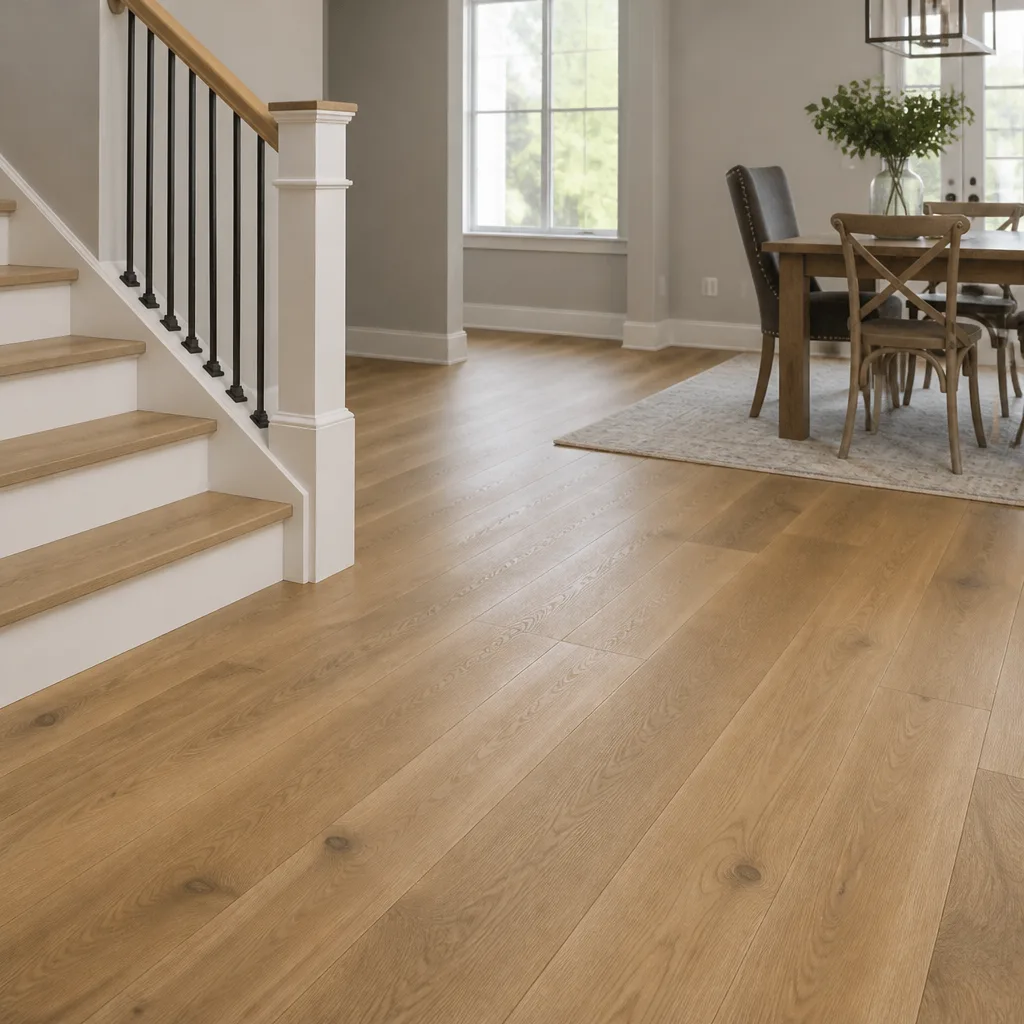
Engineered hardwood with a thick veneer core outperforms solid hardwood in Winchester’s dry winters without giving up the look and feel of real wood. The reason is structural. Solid wood is one species, one direction, so all of its movement runs across the width of the board. Engineered wood is built in cross-ply layers set at right angles, which counteracts that movement and keeps the plank far flatter as humidity drops.
What that means in practice:
- Solid hardwood gives you the authentic top layer and the refinishable thickness, but it demands tighter humidity control and wider expansion gaps. Skip either and you get gapping in winter.
- Engineered hardwood keeps the real wood surface and a wear layer you can refinish depending on how thick the veneer is, while resisting the seasonal gap-and-buckle cycle far better.
- The veneer thickness matters more than the marketing. A thin decorative veneer won’t refinish much. A thicker one gives you the option later.
Here’s the nuance most buyers miss: engineered doesn’t mean fake, and solid doesn’t mean automatically better. In a coastal climate the two perform similarly. At Winchester’s elevation, with its low humidity and wide swings, engineered is usually the smarter bet for authenticity without the risk. And when a solid floor does start to show wear, Flooring Winchester offers refinishing as a core service, which restores the surface rather than replacing the whole floor and preserves the original character of your wood.
Why Water-Resistant Vinyl Handles the Swing Best
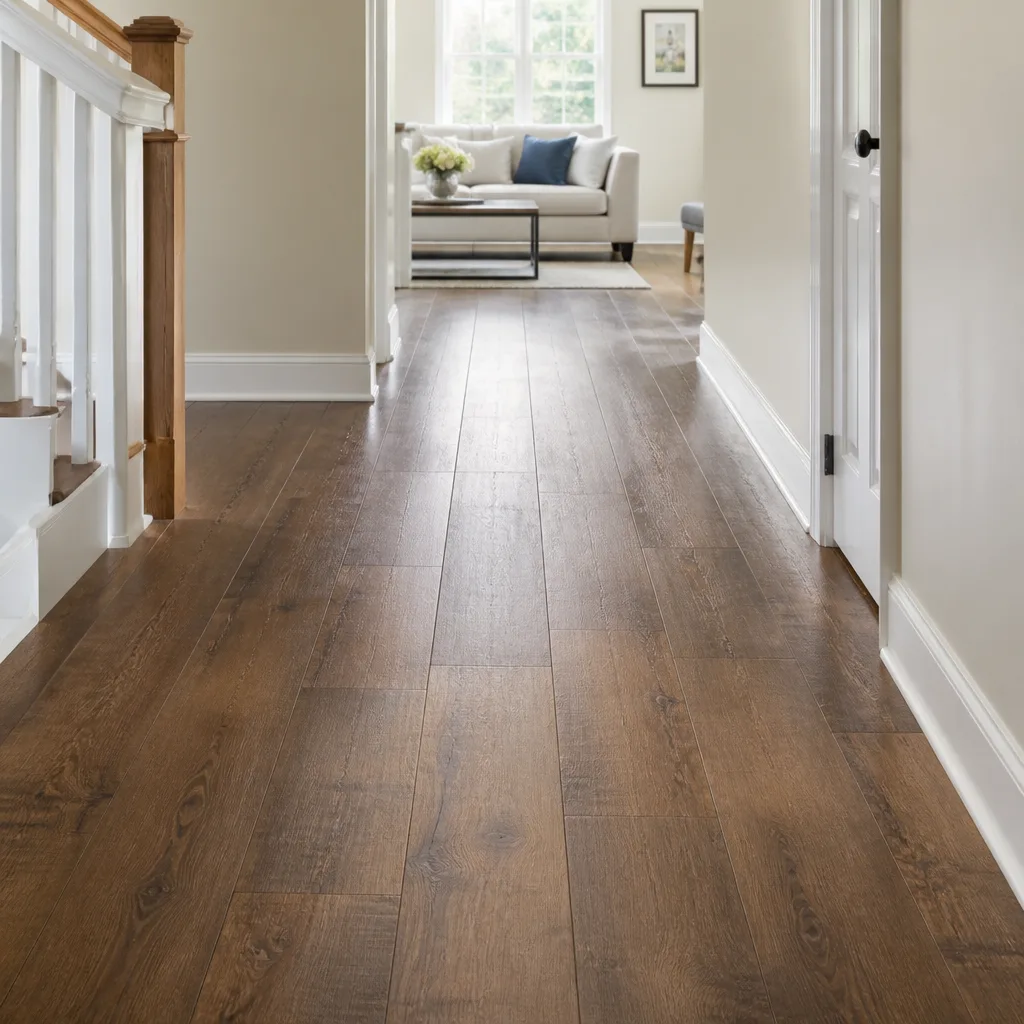
Water-resistant rigid-core vinyl is the most forgiving floor for Winchester’s climate because it barely responds to humidity at all. It’s a stable composite core with a printed and protected top layer, so the seasonal swing that moves wood doesn’t move it. That’s why COREtec and LifeProof come up so often in high-desert kitchens and mudrooms.
The practical advantages in this climate:
- No gapping. Rigid-core planks don’t shrink across the board in winter the way wood does.
- No cupping from seasonal moisture. The core stays flat where a wood floor might absorb and swell.
- Water resistance where it counts. A spill or a wet boot in a Winchester entryway is a mop job, not a repair. Note that water-resistant is not the same as waterproof; standing water and moisture from below still need to be dealt with.
One caution on language, because it matters. You’ll hear luxury vinyl described as waterproof, and we don’t use that word. Water-resistant is the honest term. The seams and edges of any floor still let moisture in if water sits long enough, and moisture wicking up from a slab is a separate problem that has to be fixed before any floor goes down.
If you have pets or a busy household, the combination of a rigid core and a tough wear layer is what makes these products hold up. Pergo and Mannington also offer water-resistant options worth comparing at the estimate, and we carry all nine of our brands under one roof so you can see how they stack up side by side instead of driving between stores.
Large-Format Porcelain Tile: The Climate-Immune Option
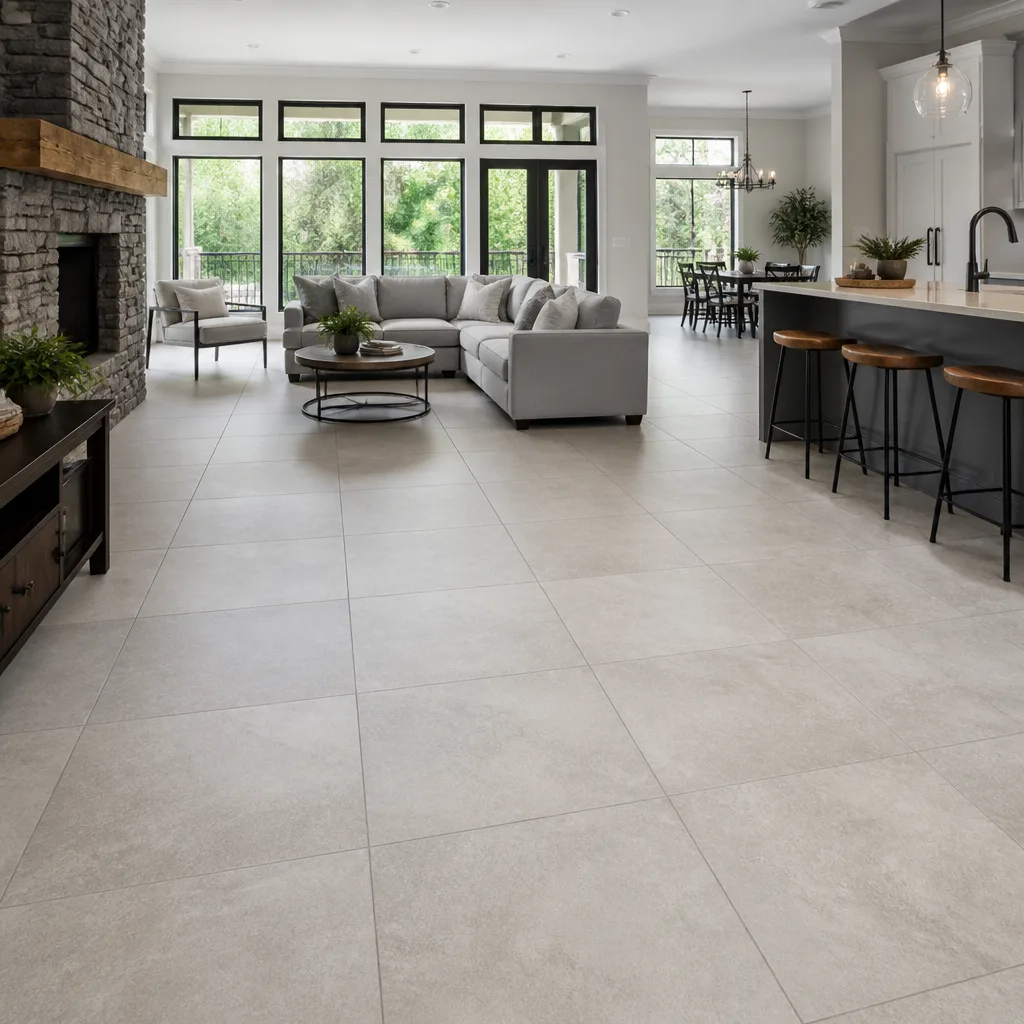
Large-format glazed porcelain tile is essentially immune to Winchester’s climate variables. Tile is fired clay; it doesn’t absorb meaningful moisture, so it doesn’t expand, contract, gap, or cup when humidity swings. In a place with this much seasonal change, that stability matters more than most buyers realize.
Where tile makes the most sense in Winchester:
- Entryways and mudrooms where dry, dusty air meets wet boots and grit.
- Kitchens and baths, where water resistance and easy cleaning beat warmth underfoot.
- Laundry rooms and utility areas, where a slab and occasional moisture would stress wood or carpet.
- Sun-heavy rooms, where the floor sits in constant light and temperature.
Tile does have trade-offs. It’s hard and cool underfoot, so it’s a poor fit for a bedroom or a den where you walk barefoot. Grout lines can collect dust in a dry climate, though a tight large-format layout reduces that. And proper installation matters enormously; a tile floor is only as stable as the substrate and the setting materials beneath it.
Our tile flooring installation work leans heavily on Daltile because the range covers everything from everyday durable porcelain to design-led surfaces. Where you have a design-forward room, Karndean brings hand-finished texture to the luxury end. The point isn’t the brand name; it’s that you get to compare the whole range in one conversation, then choose the one that fits the room instead of the one that happens to be on the shelf.
Radiant Heat and Glue-Down vs. Floating Installs
Radiant heat is common in high-desert homes, and it changes the flooring equation. A heated floor warms from below, so the material sits between a warm slab and dry indoor air, which exaggerates the humidity swing. How the floor is attached matters as much as what it’s made of.
Here’s how the two main installation methods behave with radiant heat in Winchester:
- Glue-down installation bonds the floor directly to the substrate, which gives it excellent stability and consistent heat transfer. It’s the better fit for engineered wood and tile over radiant heat because the floor can’t shift as a unit.
- Floating installation lets the floor sit on an underlayment without adhesive, which is faster and allows the floor to move as one piece. That’s fine for rigid-core vinyl, but a floating wood floor over radiant heat can feel hollow and can expand or shift as the season turns.
- Tile over radiant requires the right setting materials and a stable substrate, and a skilled installer will confirm both before starting.
The takeaway: if your home has radiant heat, don’t default to floating because it’s cheaper or faster. Ask what the heat does to the material and choose the install method that keeps it stable. That decision belongs in the written estimate, not in an installer’s gut call on the day.
Acclimation Timelines for Winchester, Not the Spec Sheet
Acclimation takes longer in Winchester than the generic timeline printed on most product spec sheets, because the indoor air here is drier than the assumptions those sheets were written for. “Let it sit indoors for a couple of days” is not a real acclimation plan in this climate.
Here’s how we approach it instead:
- Measure the space, not just the product. The estimate visit includes checking the room’s humidity and the substrate’s moisture, because those set the real acclimation window.
- Let the material settle in the actual room. The floor should sit in the space it will be installed in, at the conditions it will live in, so it reaches equilibrium before install.
- Re-check before install. Humidity moves fast here, and conditions on install day count as much as conditions on delivery day.
- Follow the product instructions. Rigid-core vinyl, engineered wood, and solid wood each expect something different, and the product documentation and written estimate set the specifics.
There’s no single number that’s right for every job in Winchester. Tile doesn’t need the same treatment wood does, and a rigid-core plank doesn’t need the same window as a solid oak. What we won’t do is skip the step or guess. Acclimation is boring work, but it’s the difference between a floor that behaves and one that gaps.
Matching Material to Each Room
The right floor for a Winchester home changes from room to room, because the climate stress and the daily use differ. There’s no single best material for a whole house, only a best material for each space and each household.
A useful way to think about it:
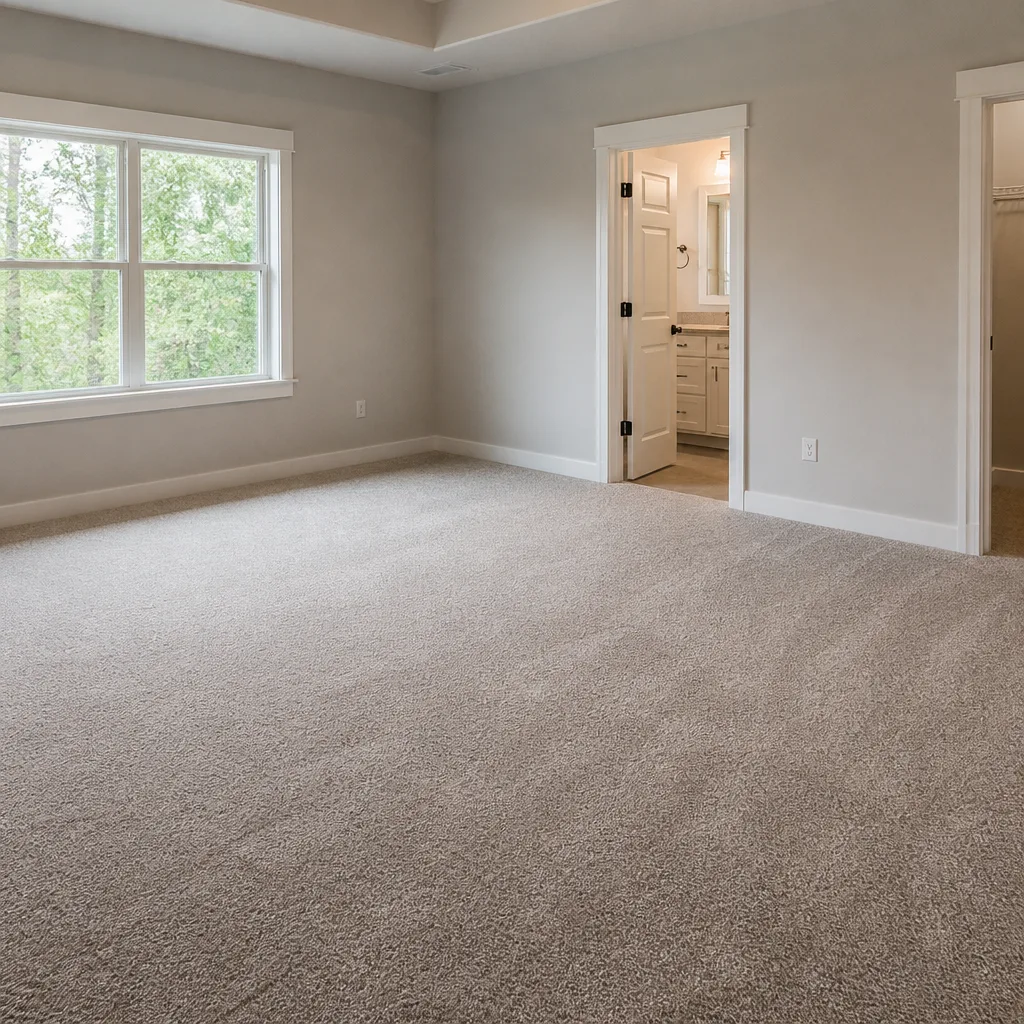
- Bedrooms and closets: carpet installation in soft, warm tones is the natural choice here. Carpet also insulates, which helps a room feel warmer on a cold, dry morning.
- Living and dining rooms: engineered hardwood for authenticity and stability, or rigid-core vinyl if the room takes heavy traffic.
- Kitchens and entries: large-format porcelain tile or water-resistant vinyl. Both shrug off the spills and grit.
- Bathrooms and laundry: tile, with attention to the substrate and setting materials.
For landlords and property managers, lifecycle cost matters more than looks. A rigid-core vinyl in a rental unit survives turnover after turnover without the seasonal movement a wood floor would show, which keeps maintenance predictable across the life of the property. In an owner-occupied home, the conversation shifts toward character, warmth, and how long the floor will hold its appearance. Those are different questions, and they lead to different answers. With nine brands across carpet, tile, and hardwood refinishing, we can answer both questions in the same visit rather than selling you the same floor twice.
Common Mistakes to Avoid
- Choosing solid hardwood without humidity control. Without deliberate humidity management in winter, a solid floor will gap. Plan for it before you commit, not after the first cold snap.
- Trusting the generic 48-hour acclimation rule. Winchester’s dry air means wood often needs longer to reach equilibrium. The spec sheet wasn’t written for this climate.
- Laying a floating floor over radiant heat without a plan. A floating wood floor over a heated slab can shift and feel hollow. Glue-down is often the better call.
- Believing “waterproof” marketing on vinyl. Water-resistant is the honest term. Standing water and moisture from below still require attention, so fix the source before the floor goes down.
- Skipping the substrate check. Tile and wood both fail when the substrate is wrong, and a slab in a high-desert home can have moisture issues that aren’t obvious.
- Replacing wood that could be refinished. A worn solid or engineered floor can often be sanded and refinished instead of torn out, which saves real money and preserves the original material.
- Choosing one material for the whole house. The climate and the use differ room by room. A single product across every space often ends up wrong somewhere.
See the difference
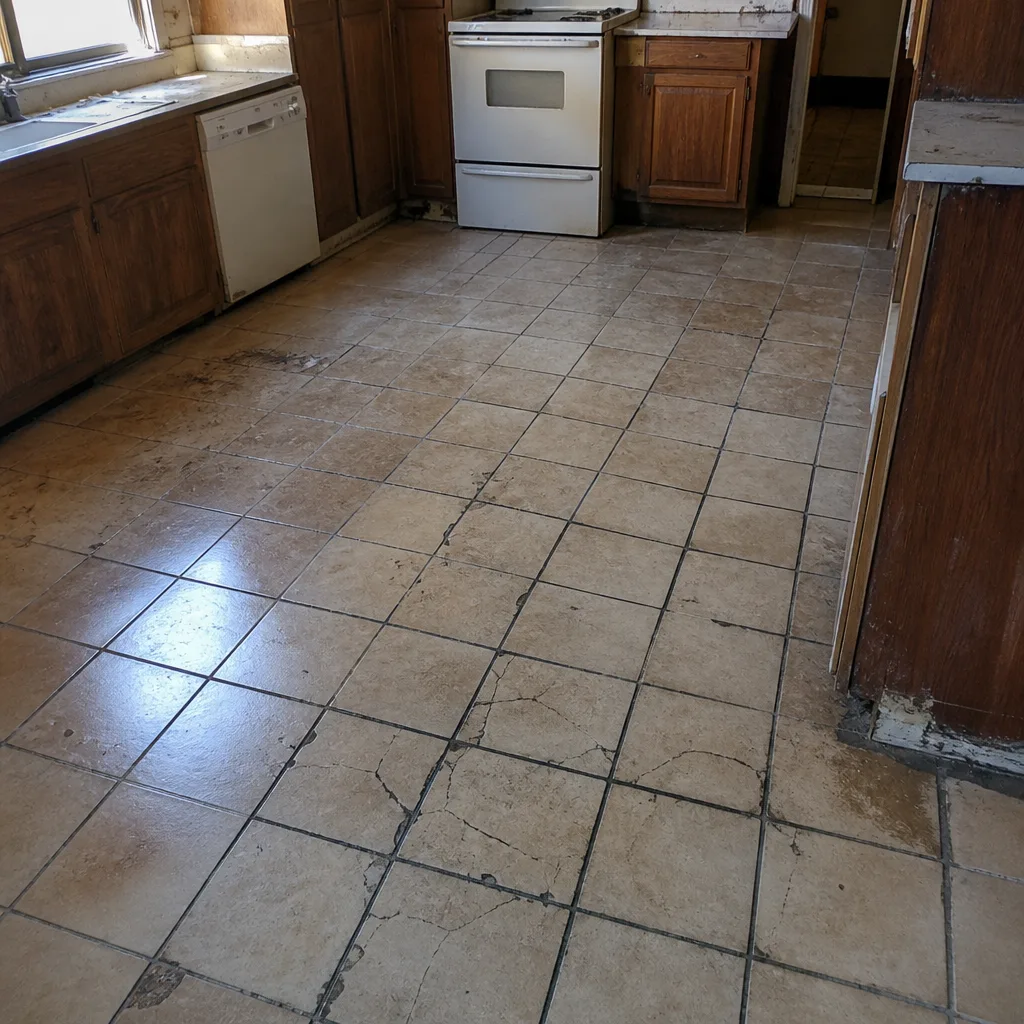 Before
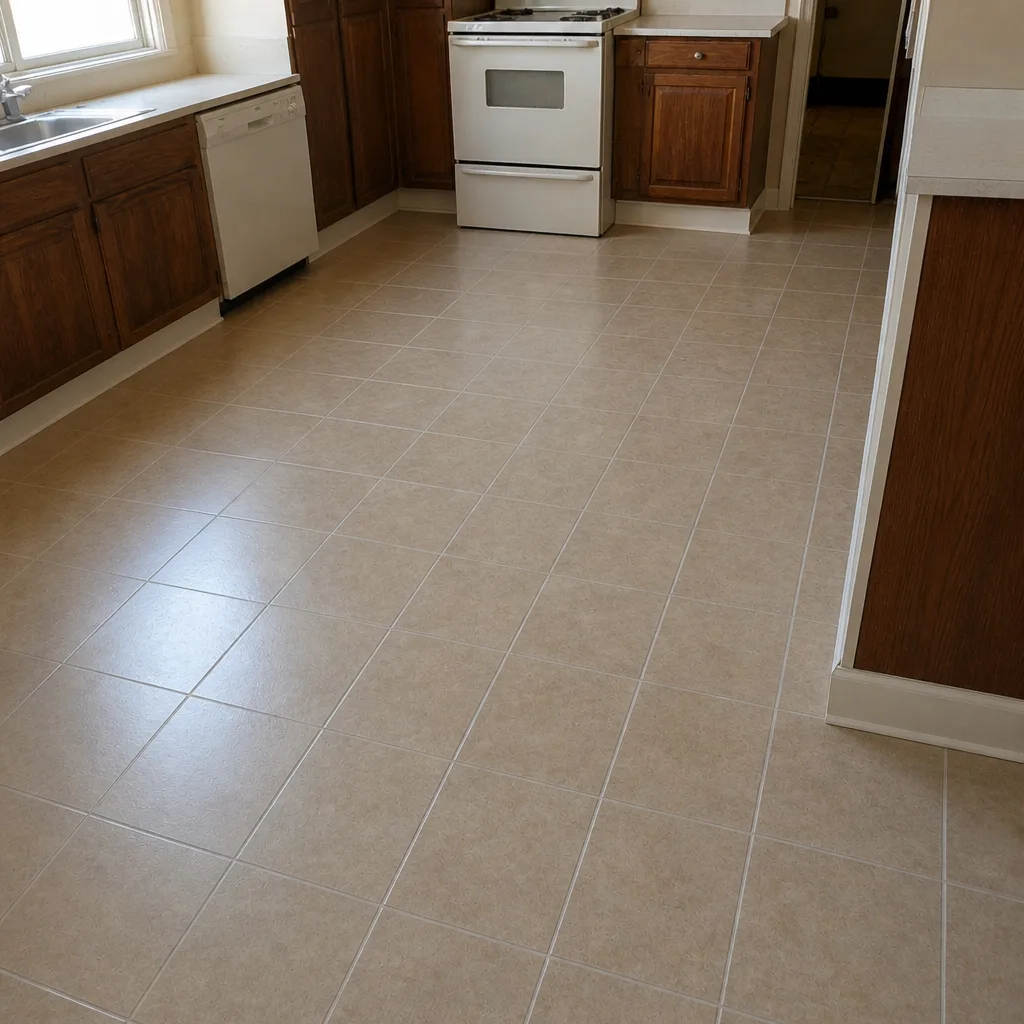 After
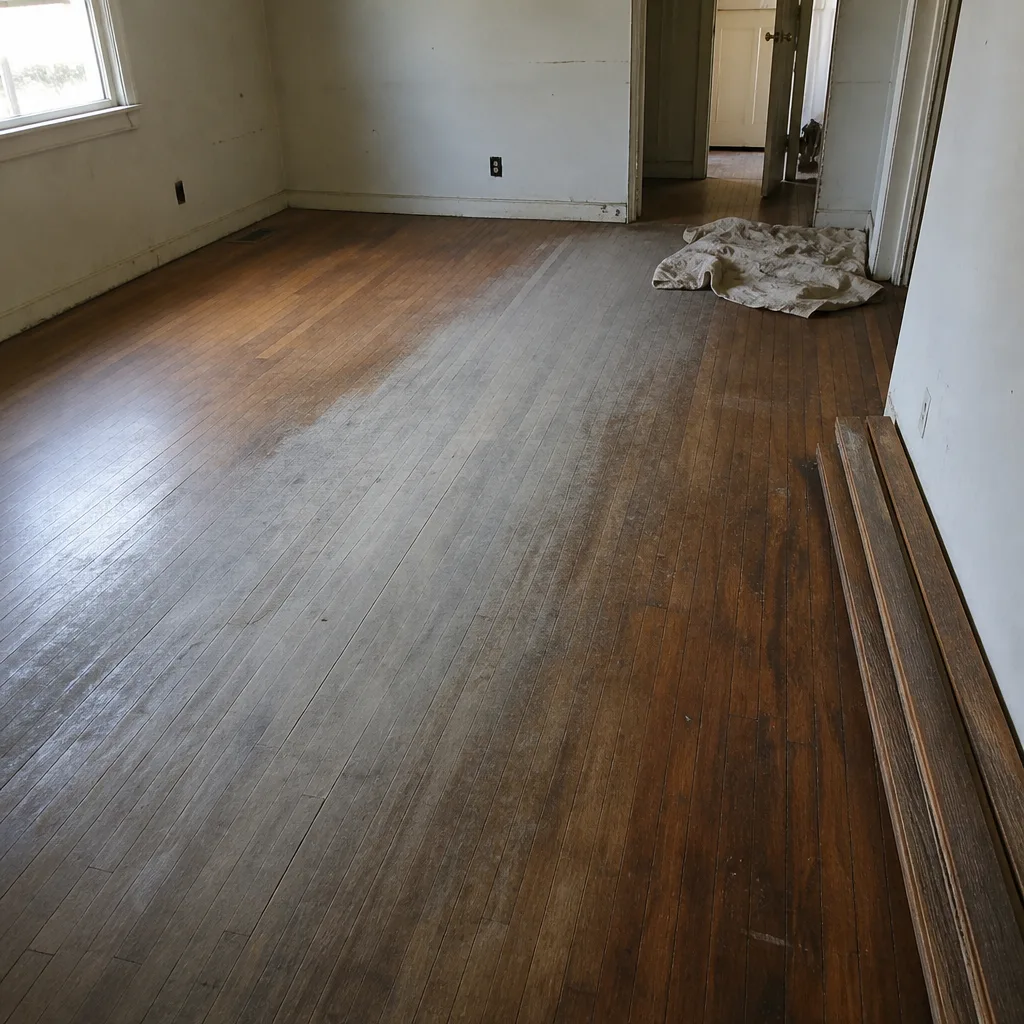 Before
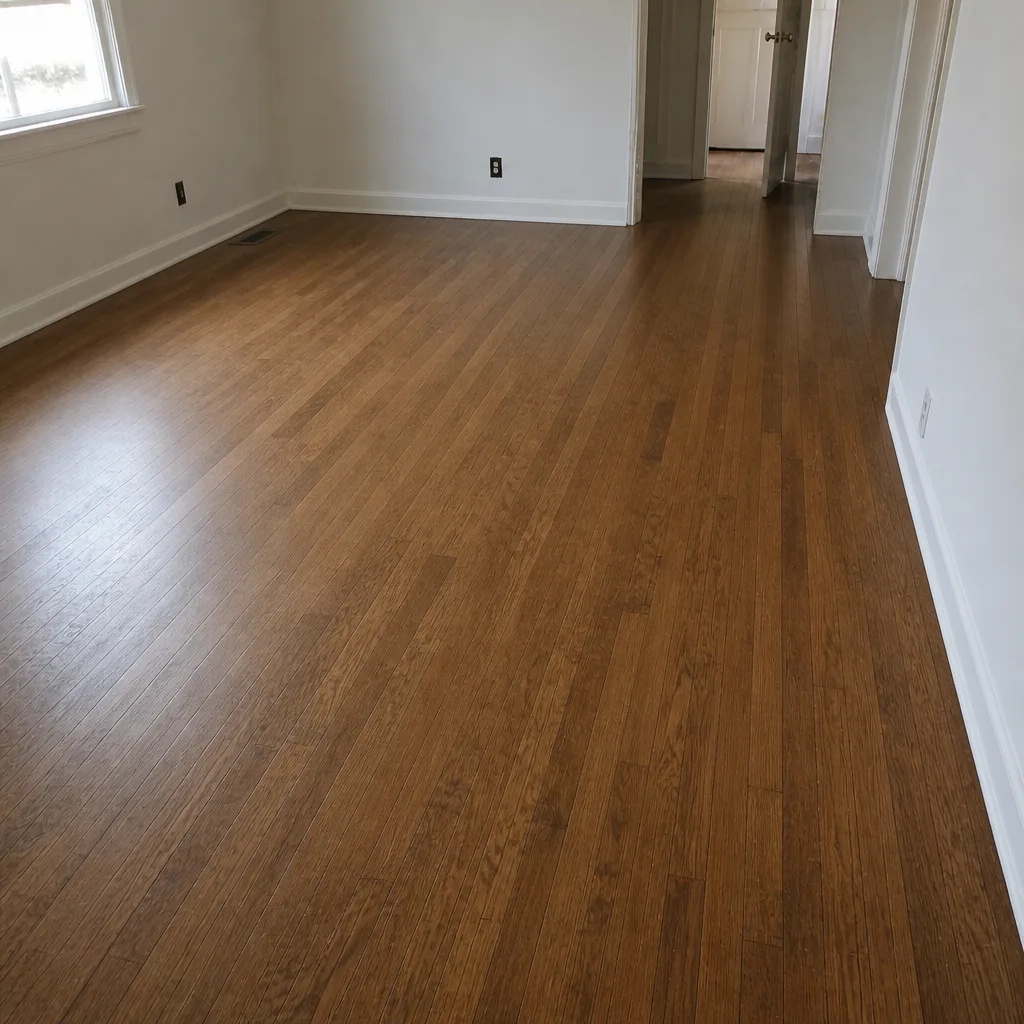 After
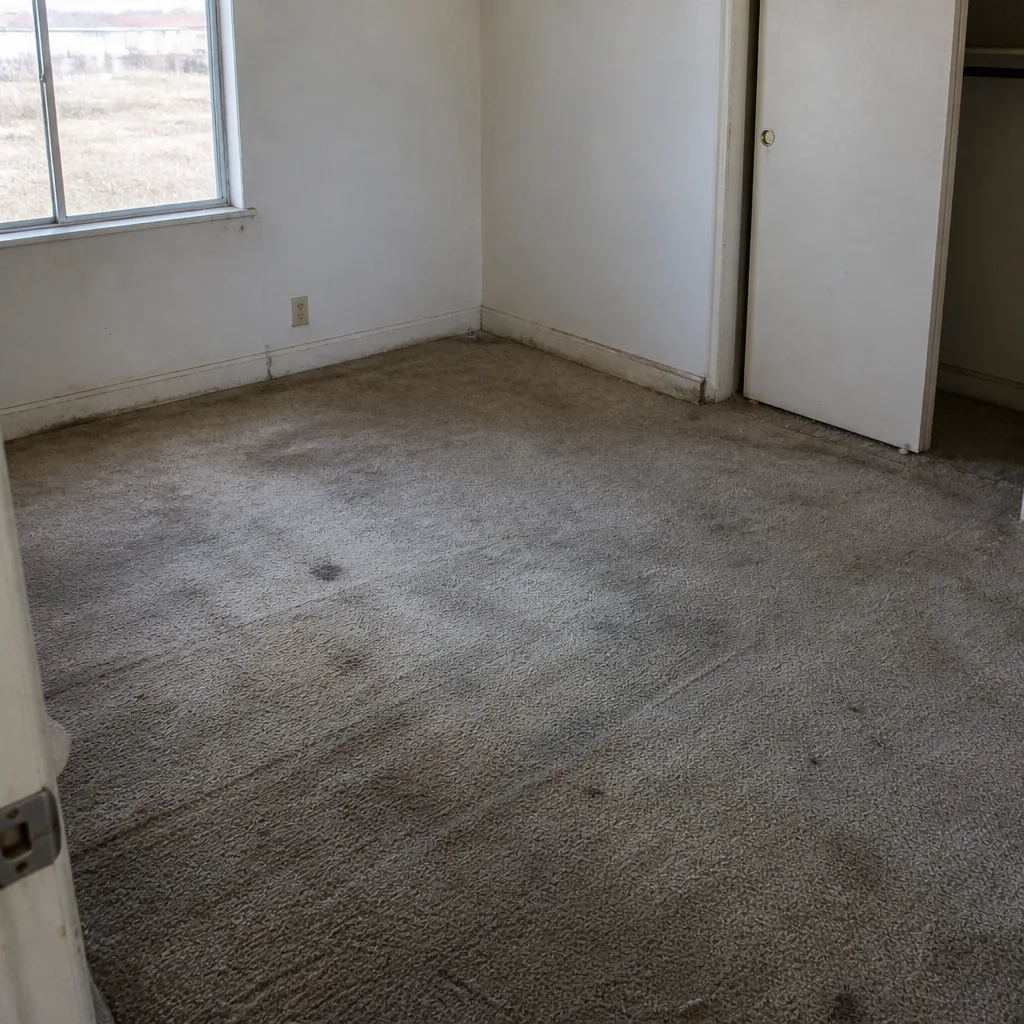 Before
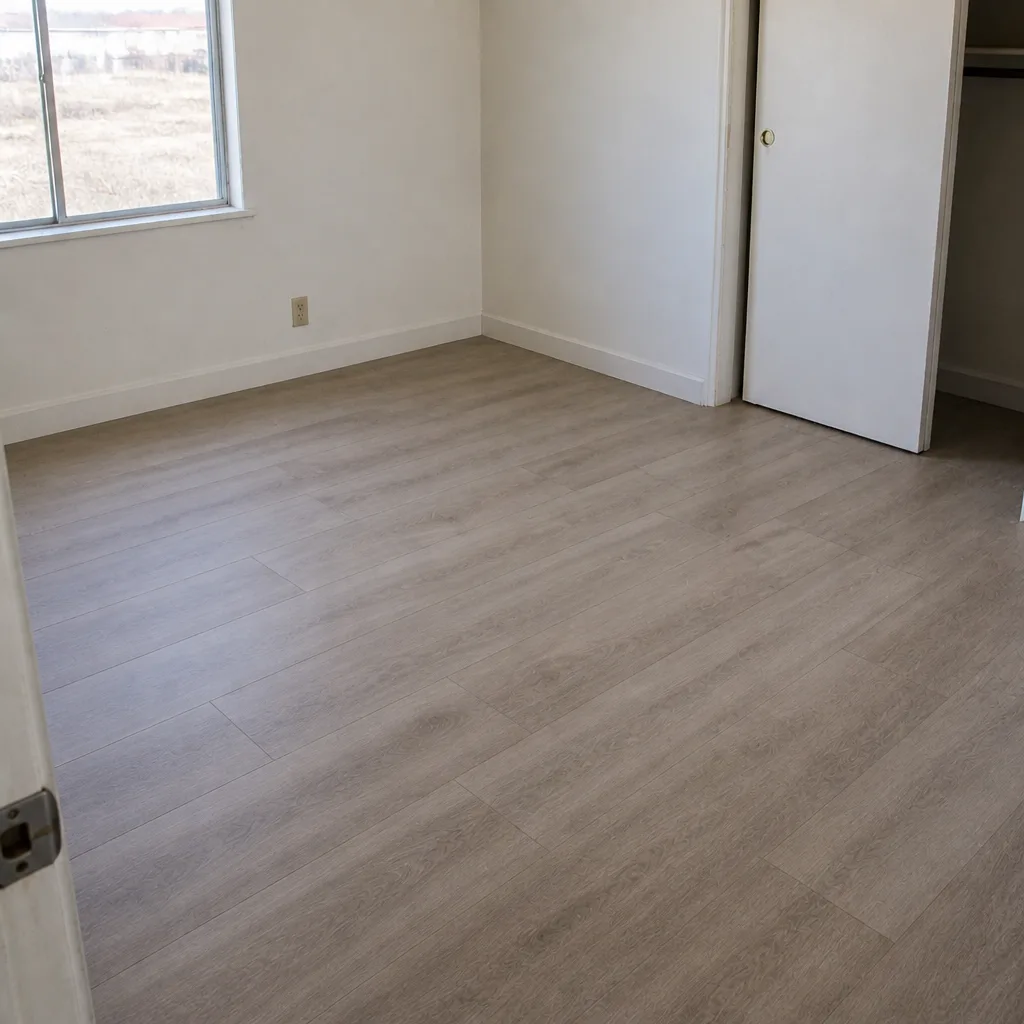 After
When to Call a Professional
Some flooring decisions are fine to make on your own. Others carry real risk. If you’re dealing with a slab that may have moisture coming up through it, a wood floor that has already gapped or cupped, or radiant heat under a material you’re not sure about, that’s when a professional visit saves you money rather than costing it. The same is true if you’re matching a floor to an existing material across a threshold, or if you’re planning a large-format tile layout with tight grout lines. Our technicians have up to 8 years of experience and work in the material, not around it. Flooring Winchester offers free estimates in Winchester. Call (844) 761-8337. We answer 24/7. Fast dispatch from 7am to 7pm, Sunday through Friday, and the written estimate sets the final price.
Frequently Asked Questions
Engineered hardwood with a thick veneer core, water-resistant rigid-core vinyl from lines like COREtec or LifeProof, and glazed porcelain tile are the best-performing floors for Winchester’s climate because they tolerate low humidity and wide seasonal swings. Solid hardwood can still work with proper humidity control. Call (844) 761-8337 for an exact quote, and estimates are free.
Solid hardwood gaps in a Winchester winter because heated indoor air is very dry, so the wood loses moisture and shrinks across the width of each board. It’s normal movement, not damage, but wide gaps point to a floor that was installed too tight or a home without humidity control. Call (844) 761-8337 to schedule a free estimate on a fix.
Yes. Engineered hardwood is usually a better fit for a high-desert home than solid because its cross-ply core resists the seasonal movement that opens gaps in dry winters, while keeping a real wood surface. The look and feel stay authentic. Call (844) 761-8337 for a free estimate on engineered options from the brands we carry.
Acclimation in Winchester typically takes longer than the generic spec-sheet timeline because indoor air here is drier than the assumptions those sheets were written for. The right window depends on the product and the home, and the product instructions and written estimate set it. Call (844) 761-8337 to book a free measure and estimate.
Yes, tile can go over radiant heat in Winchester, provided the substrate is stable and the right setting materials are used. Tile barely responds to humidity, which makes it one of the most stable choices in this climate. Call (844) 761-8337 for a free estimate and an install plan.
No. Water-resistant vinyl resists spills and everyday moisture but is not impervious to standing water or moisture coming up from a slab. Those have to be dealt with before any floor goes down. Call (844) 761-8337 for a free estimate on water-resistant options from COREtec, LifeProof, Pergo, and Mannington.
The Bottom Line
Winchester’s high-desert climate is the quiet factor in every flooring decision, and it rewards materials that tolerate low humidity and big seasonal temperature swings. Solid hardwood moves the most and needs humidity control. Engineered hardwood keeps the authentic look while staying flatter through the swing. Rigid-core water-resistant vinyl from COREtec or LifeProof is the most forgiving underfoot and in the mudroom. Large-format glazed porcelain tile is effectively immune to the whole problem. Radiant heat pushes you toward glue-down over floating, and acclimation takes longer here than the spec sheet says. Match the material to the room, respect the conditions, and call (844) 761-8337 for a free estimate. We answer 24/7. Fast dispatch from 7am to 7pm, Sunday through Friday.
Written by the team at Flooring Winchester.