
Last updated November 18, 2026
 Hardwood
 Engineered hardwood
 Luxury vinyl plank
 Laminate
 Porcelain tile
 Carpet
 Shaw
 Mohawk
 COREtec
 Pergo
Free in-home measure and written estimate: Shaw, Mohawk, COREtec and Pergo lines compared on your own rooms, with carpet, tile, vinyl plank, laminate and hardwood laid out side by side
Get your free estimateFlooring Installation Questions to Ask Before You Sign
Most flooring problems that end badly in a contract were fully preventable at the kitchen table, before anyone picked up a pen. The homeowner did nothing wrong. They simply didn’t know the five questions that separate an accountable installer from one who’ll disappear behind a change order. Here’s the counterintuitive part: the contract signing is the last moment you have real leverage. After demo day, you’re negotiating from a house with no floor. This guide walks Winchester homeowners through the specific, technical questions that protect you from warranty gaps, surprise charges, and installation shortcuts.
Quick Answer
Before you sign a flooring contract in Winchester, ask who owns subfloor diagnosis and repair pricing, how the manufacturer warranty and labor warranty stack (and what voids each), what triggers a change order and whether the contract caps it, whether the crew is employed or subcontracted, and what “done” means in writing. A contractor who answers all five clearly and puts them in the document is one you can work with. One who deflects on any of them is telling you something important.
Styles & brands we work with
- Hardwood
- Engineered hardwood
- Luxury vinyl plank
- Laminate
- Porcelain tile
- Carpet
- Shaw
- Mohawk
- COREtec
- Pergo
Table of Contents
- Who Is Responsible for Subfloor Issues?
- How Do Product and Labor Warranties Stack?
- What Triggers a Change Order, and Is It Capped?
- Who Is Actually Installing Your Floor?
- What Does “Done” Mean in the Contract?
- What Should You Ask About Winchester’s Climate and Housing?
- Which Material-Specific Questions Matter?
- Common Mistakes to Avoid
Who Is Responsible for Subfloor Issues?
This is the question that unravels more flooring projects than any other, and it almost never appears in a written contract. Here’s what happens when it’s missing: the crew pulls up the old floor, finds a soft spot, a hump, or a moisture problem, and suddenly you’re staring at a scope you never priced. The homeowner expected the installer to catch it. The installer expected the homeowner to know it. Nobody wrote it down.
The responsible answer is that the flooring contractor owns subfloor diagnosis and pricing, and it happens at the estimate visit, not after demo. You want a written statement covering three things:
- Who inspects the subfloor, and whether that inspection is part of the free estimate or a separate step.
- What the contract does if the inspection finds a problem that wasn’t visible from the surface.
- How repair work is priced if it turns out to be needed, and whether that price was locked in at signing or left open.
Ask it directly: “If you pull the carpet and the subfloor is bad, what happens to my price?” A contractor who says “we’ll deal with it” hasn’t answered the question. A contractor who says “we’ll assess it at the estimate and price any repair into the written quote before work begins” has. Subfloor condition varies from house to house in Winchester, and no honest installer can promise what’s under the old floor without looking. What they can promise is a protocol.
For households weighing material choices before that conversation, our Flooring Winchester guide covers how each material category handles the subfloor and what questions to bring to the estimate.
How Do Product and Labor Warranties Stack?
Warranties on flooring come in layers, and the layers have a nasty habit of voiding each other if the paperwork isn’t coordinated. Homeowners hear “25-year warranty” and assume it covers everything for 25 years. It rarely does. There are usually three separate warranties on a single install:
- Manufacturer product warranty – covers the flooring material itself against defects. This is the one with the long term.
- Installation labor warranty – covers the installer’s workmanship, typically much shorter than the product warranty, and usually the one that matters when something fails.
- Dealer or contractor warranty – covers the overall project, and depends entirely on what’s written in the contract.
The questions that matter are the connectors between them. Ask: “If the product fails, who files the manufacturer claim – me or you?” Ask: “If the installation is defective, what’s the labor warranty term, and does it cover the cost of removing and reinstalling the product?” Ask: “What voids the manufacturer warranty – and is that something I could accidentally do, or something only your crew could do?”
That last one is the critical question most homeowners never ask. Manufacturer warranties routinely hinge on installation conditions they specify: subfloor prep, acclimation, adhesive or fasteners, expansion gaps at walls. If your installer skips a step and the product fails a year later, the manufacturer can point at the installation and deny the claim. The installer’s labor warranty may or may not cover the gap. Ask which party is responsible for what, and get it in writing.
When you’re selecting materials, our carpet installation page covers how warranty terms differ by soft surface versus hard surface, which is worth understanding before you sign either one.
What Triggers a Change Order, and Is It Capped?
A change order is a written amendment to the original scope, and it’s completely legitimate when it exists for a real reason. The problem is that change orders can be used to offload scope the contractor should have priced in the first place. The homeowner signed for $X, discovers three weeks later that the final is $X plus 30%, and can’t tell whether that was inevitable or invented.
Ask these before you sign:
- What specifically triggers a change order in this contract?
- How are change-order prices set – fixed rate, hourly, or negotiated per job?
- Does the contract cap the total change orders I can face, or is it open-ended?
- Do I have the right to decline a change order and stop the job without penalty, or am I committed once it’s presented?
The cap question is the one most contracts fail. An honest cap might be a percentage of the original contract, or a maximum dollar amount, or a clause that says “no work proceeds without written homeowner approval of the new price.” Any of those give you protection. “We’ll let you know when it comes up” is not a cap. Neither is a verbal agreement.
Winchester homes range from newer builds to older properties with flooring transitions from several remodels, and the more transitions your house has, the more likely a change order enters the picture. A contractor who’s honest will say ahead of time: “We expect to find this here; if we find more, here’s how we handle it.” That statement in writing is worth more than any verbal reassurance.
Who Is Actually Installing Your Floor?
On a lot of contracts, the salesperson you met is not the person who shows up with the tools. Sometimes the person with the tools is a subcontractor the sales company has never met before that morning. That’s a problem, and it’s worth asking about directly.
Ask these questions about the crew:
- Are the installers employees or subcontractors? Neither answer is automatically wrong, but the answer tells you who is accountable if something goes sideways.
- Is it the same crew from start to finish, or do different crews handle different phases? Continuity matters: a crew that installed the subfloor understands the transitions and the substrate better than a new crew arriving on day five.
- Who is the on-site supervisor, and are they present daily? A crew without supervision is not necessarily bad, but a supervisor who never visits is a warning sign on a material like tile that has no room for sloppy layout.
- What’s the process if I have a concern mid-install? You want a named point of contact and a clear escalation path, not “call the office.”
Tile is the material where crew quality is most visible. Layout, grout joints, and how the installer handles the edges of the room reveal everything. Carpet reveals craft in the seaming and the stretch. Hardwood refinishing is where a crew’s material knowledge shows most, since sanding sequence and finish application are the whole job. Our tile flooring installation page covers the crew-level details that separate a fair install from a great one.
What Does “Done” Mean in the Contract?
Homeowners and installers rarely disagree on the floor itself. They disagree on what happens after the floor. Transitions, baseboards, cleanup, and the final punch list are where most completion disputes live, and they’re almost always preventable if the contract defines “done” in writing.
Ask: “When you say the job is complete, what specifically gets finished that day, and what do you expect me to inspect?” Then write down the answers into the contract. Get these items covered explicitly:
- Transitions: which rooms have them, which products are used, and who installs them. Threshold strips, T-moldings, and stair nosings should be named, not implied.
- Baseboards: whether they’re removed and reinstalled, replaced, or left in place. If they’re reinstalled, who patches the paint where the shoe molding was.
- Cleanup standard: what “broom clean” means versus “moved-in ready,” and whether hauling the old flooring is included.
- Punch list: how you submit items, how long the contractor has to return and resolve them, and whether the final payment is held until they’re resolved.
That last point is the one that changes the dynamic. A contract that holds back a portion of final payment until the punch list clears gives you real leverage. A contract that requires full payment on the day the crew leaves gives you none. Ask: “Can the final payment be held until the punch list clears?” If the answer is no, ask why.
What Should You Ask About Winchester’s Climate and Housing?
Winchester sits in the desert Southwest, which changes the flooring question in two ways most guides ignore. First, humidity swings between the dry interior and the far more humid indoor environment the HVAC creates can produce movement in wood and wood-based products. That makes expansion gaps, acclimation, and moisture management contract questions, not just installation details. Second, the desert heat and sun through west-facing windows put real stress on flooring near those windows.
Ask your installer: “How does the climate here affect acclimation for the product I’m choosing, and where does the manufacturer spec say my floor needs extra expansion?” For any material containing wood fiber, including the wood-look products at COREtec, Pergo, LifeProof, and Mannington, there is a real answer in the product instructions, and a serious installer will know what it is. None of us can substitute our own rule for the product spec, but we can tell you what the spec says and how it applies to your room.
Second Winchester-specific question: “How will you handle the transition between rooms where the temperature shifts most?” Homes on the valley edge, especially those with large western exposure, run hotter in the afternoon than interior homes. Flooring transitions that are handled generically can fail prematurely at exactly the rooms that get the most sun. Ask how the installer plans to manage those transitions.
For a look at how those neighborhood-specific construction details play out across the area, our Winchester page covers the housing mix and what that means for flooring choices.
Which Material-Specific Questions Matter?
Beyond the universal contract questions, each material category has its own contract questions. Bring these to the estimate:
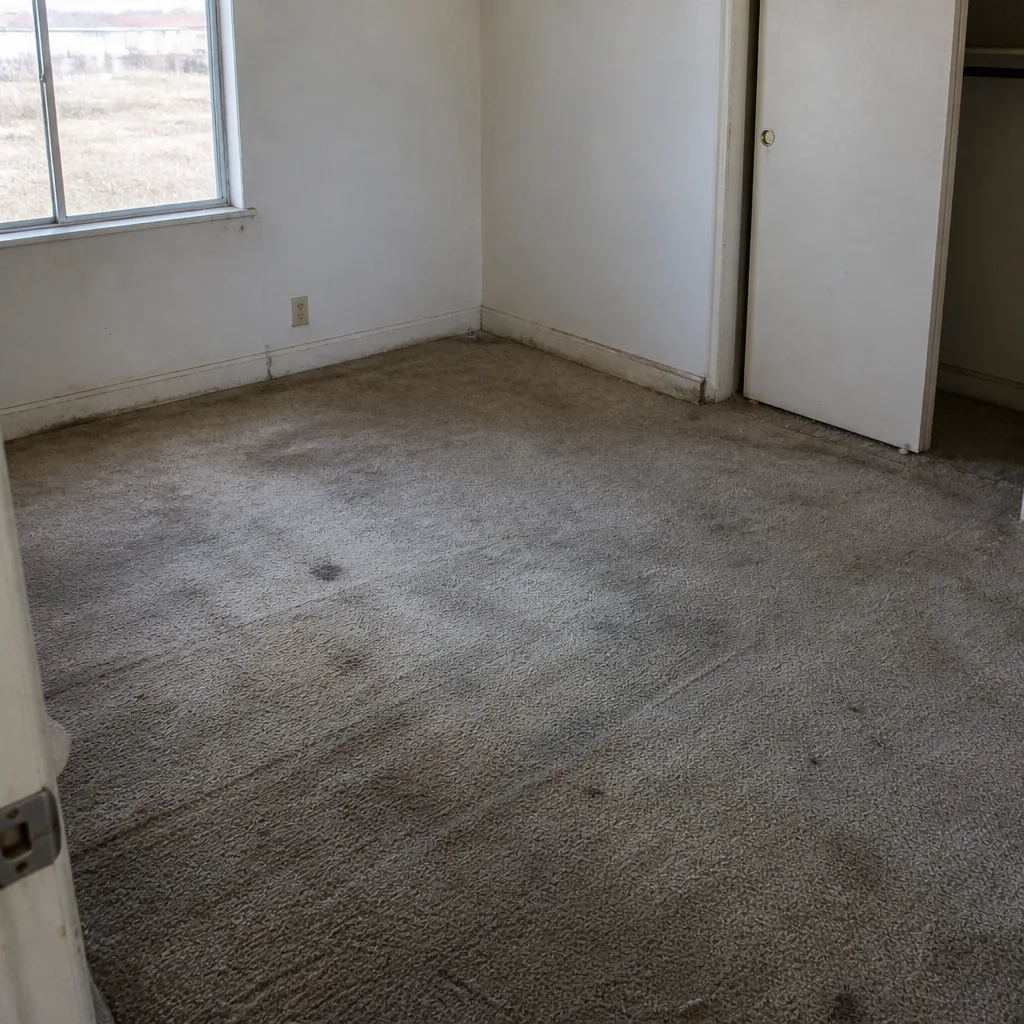
- Carpet: Ask what carpet cushion is being specified (density and thickness matter more to the feel than the carpet itself), whether stretching is power-stretched, and who handles seaming pattern alignment on patterned goods.
- Tile: Ask about the substrate (tile on wood subfloor vs. tile on a cement backer board are entirely different jobs), what the joint layout will be, and whether the contract specifies which grout is being used.
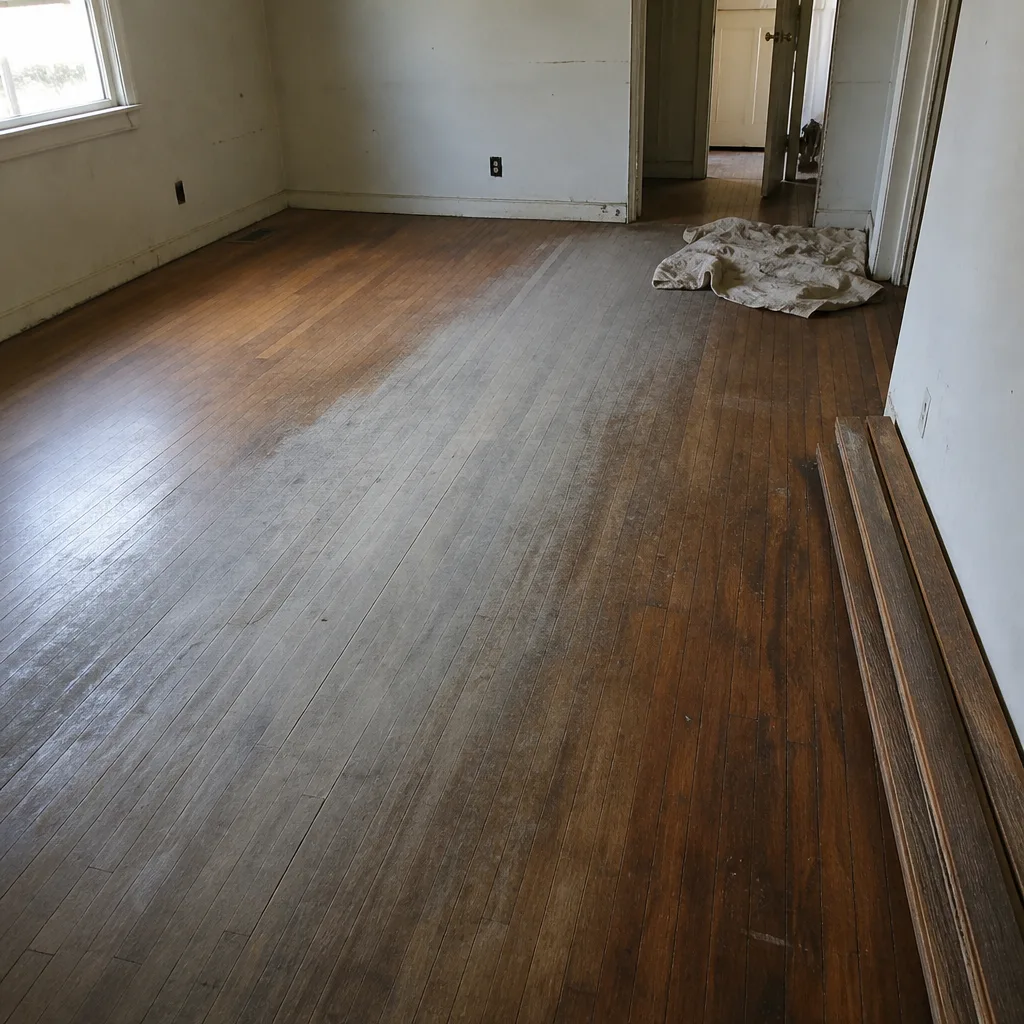
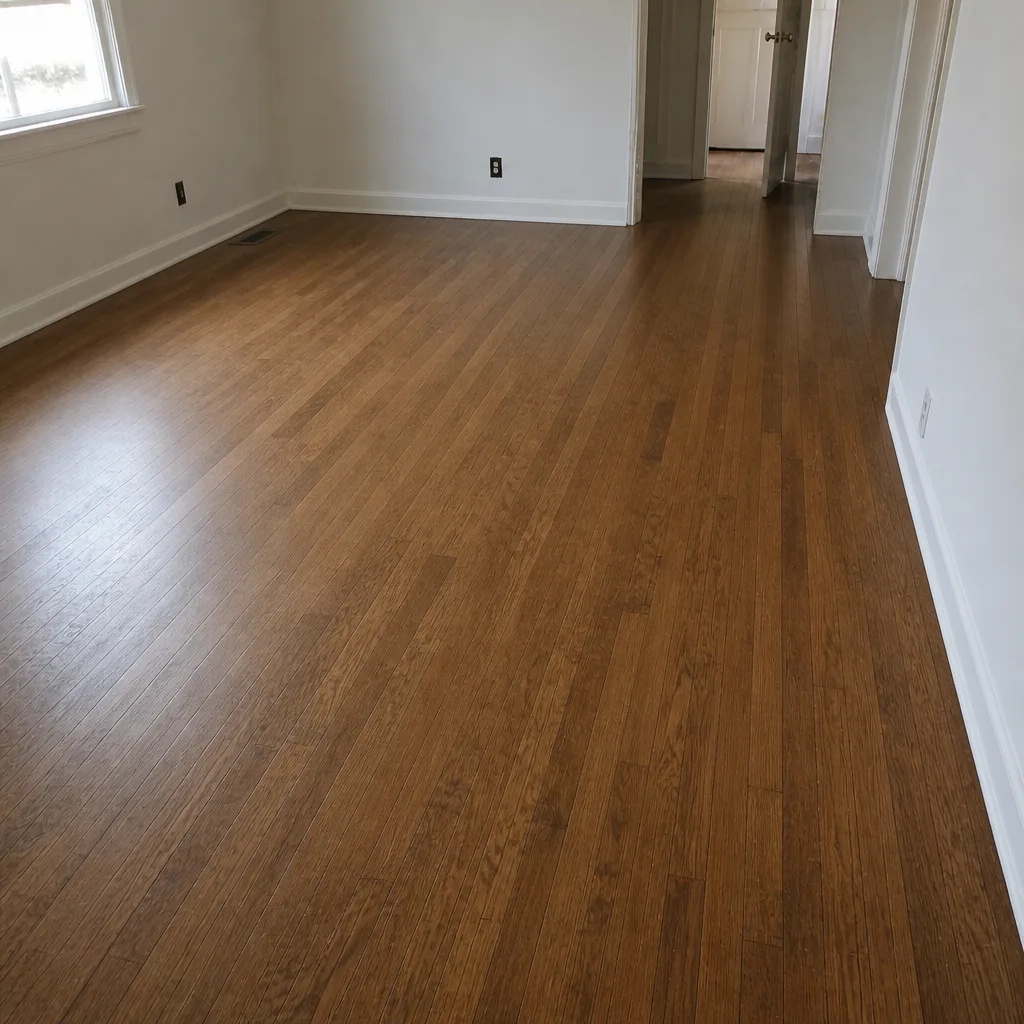
- Hardwood refinishing: Ask how much of the wear layer remains and whether the floor can be refinished again. Then ask what happens if a stain sample can’t be matched to the original tone. The answer should be honest: it depends on the wood’s thickness and condition, checked at the estimate visit.
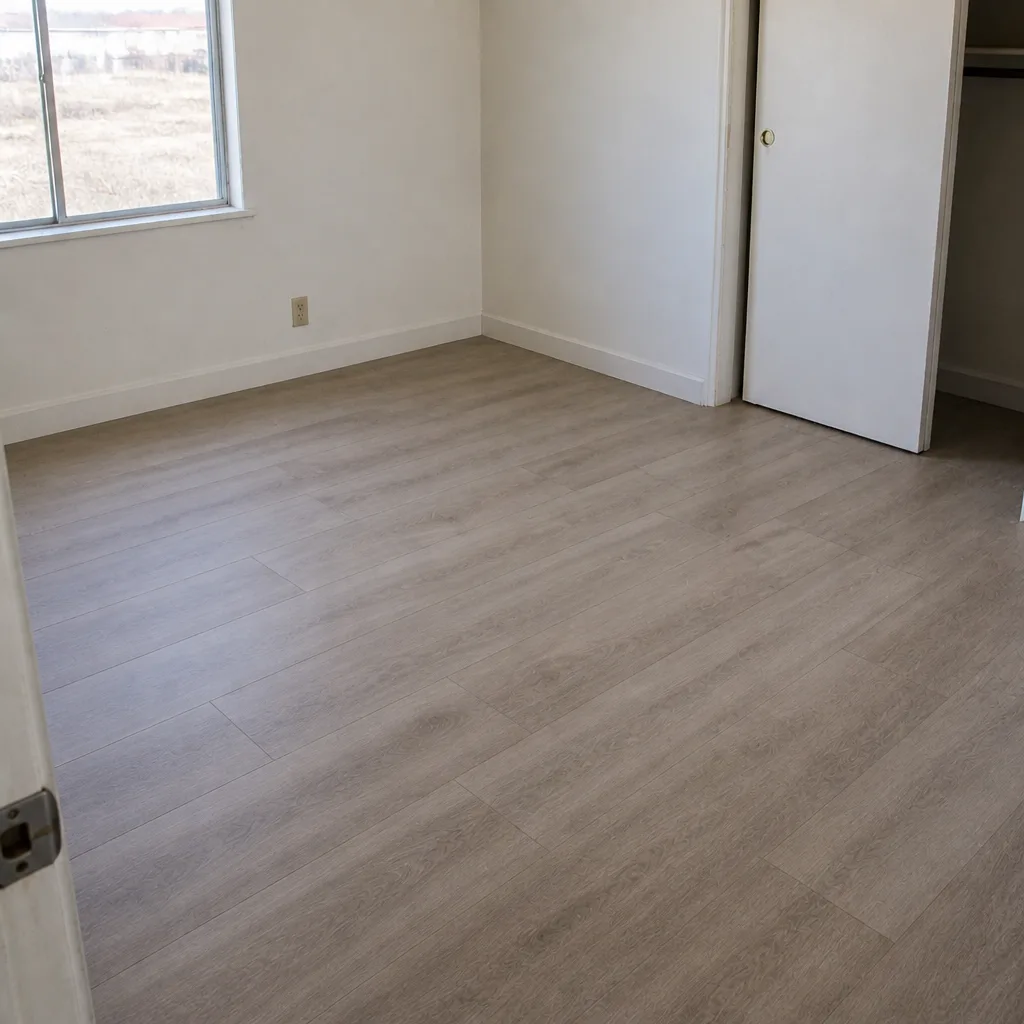
- Water-resistant products (COREtec, LifeProof, Pergo): Ask what “water-resistant” covers and what it doesn’t. Standing water and moisture from below still need to be dealt with. No contract should call any floor waterproof.
Hardwood refinishing is where the smart-money decision often lives. Restoring existing wood rather than defaulting to replacement saves significant cost and preserves the original character of your floor. Many homeowners sign installation contracts when a refinished floor would have served better. Ask the question directly: “Is my existing hardwood refinishable, and if so, how does the refinish cost compare to a new install?”
Common Mistakes to Avoid
- Signing before the subfloor inspection. If your contractor won’t look at the subfloor before they quote, they’re pricing a floor that doesn’t exist. Ask them to inspect, then quote.
- Accepting a verbal warranty. A warranty that isn’t in the written contract isn’t a warranty. Ask for the labor warranty term on paper.
- Signing a contract with no change-order cap. In older Winchester homes especially, unreported prior remodels are common. An uncapped change-order clause can turn a fair price into a much bigger final number.
- Assuming the crew that shows up is the crew that quoted. Confirm in writing whether the installers are employees or subcontractors, and ask for the crew continuity agreement.
- Leaving “done” undefined. Transitions, baseboards, cleanup, and punch list resolution should all be in the contract, not in the installer’s head.
- Choosing material backwards from the room. Start with how you actually live in the room, then choose material. Choosing the material first and forcing it into the room is how flooring underperforms.
- Skipping hardness and wear questions on hardwood. Hardwood refinishing restores an existing floor, but a floor that’s been refinished several times may not have another pass left. Ask before you sign a refinish contract.
See the difference
 Before
 After
 Before
 After
 Before
 After
When to Call a Professional
Bring in a professional when the diagnosis requires material knowledge you don’t have. That’s the subfloor conversation. That’s the “can my hardwood be refinished or not” question. That’s the change-order scope. That’s the warranty stacking between product and labor. These are not questions a homeowner can answer from a manufacturer’s website. Flooring Winchester offers free estimates in Winchester – call (844) 761-8337. We answer 24/7. Fast dispatch from 7am to 7pm, Sunday through Friday. Our technicians have up to 8 years of experience across carpet installation, tile flooring installation, and hardwood refinishing, and the estimate is where we map out exactly which brands and materials fit your rooms. Pergo and Mannington are strong choices for everyday durability, while COREtec and LifeProof give you water-resistant options for kitchens, baths, and mudrooms. The written estimate sets the final price.
Frequently Asked Questions
Yes, our estimates are free. We come out, look at the subfloor, ask how you use each room, and put together a written quote. That quote sets the final price and includes any change-order caps we discussed. Call (844) 761-8337 to schedule your free estimate.
Flooring installation in Winchester is priced per job based on the material, room size and condition, and subfloor prep. The written estimate you receive at the visit is the price you pay. Call (844) 761-8337 for an exact quote – estimates are free.
Installation timing depends on the material, room size, and any subfloor work. Carpet runs faster than tile; hardwood refinishing has multiple phases because of the sanding and finish steps. The schedule is set at the estimate visit, and we book the install once the written quote is signed. Call (844) 761-8337 to get your estimate and a scheduled install date.
Often yes, and refinishing is worth asking about before you sign a replacement contract. Whether your floor can be refinished depends on the thickness of the wood and its condition, both of which we check at the estimate visit. Flooring Winchester offers hardwood refinishing as a core service, not an afterthought, because restoring original wood is often the smarter first option. Call (844) 761-8337 for a free refinishing evaluation.
Ask your flooring contractor directly, and get the answer in writing. Subfloor diagnosis and pricing are the contractor’s responsibility, and that responsibility belongs in the written contract, not in a verbal commitment. If your current contractor can’t answer the subfloor question clearly, that’s a strong signal to get a second estimate. Call (844) 761-8337 for a free second opinion.
We supply and install Shaw, Mohawk, COREtec, Pergo, LifeProof, Mannington, Armstrong, Daltile, and Karndean – nine brands across carpet, tile, and hardwood. Each material category is treated as a specialty, so the installer handling your Daltile tile isn’t the generalist who handles everything else. Call (844) 761-8337 to discuss which brands fit your rooms.
The Bottom Line
The contract signing is the last moment you have leverage. After that, you’re working with a house that’s already torn up. The five questions in this guide – subfloor responsibility, warranty stacking, change-order caps, crew identity, and what “done” actually means – are the ones that protect you from the disputes most homeowners face. Get each answered in writing before you sign. Not verbally, in writing, in the contract. A contractor who can answer all five clearly is one you can work with. Want a second opinion before you sign? Call (844) 761-8337 for a free estimate. We answer 24/7. Fast dispatch from 7am to 7pm, Sunday through Friday.
Written by the team at Flooring Winchester.